Despite the stresses of this week–my aunt was just diagnosed with breast cancer, one of my best friends had brain surgery today–I managed to finish the revision outline for the werewolf story. It’s not very in-depth, only six pages long, but I think it will help me get organized to actually finish the revision (FINALLY). I’m hoping so, anyway.
I wrote for 20 minutes or so yesterday on The Fall. Only got a few hundred words or so, but that’s better than nothing. Even better, I have an idea for part of the plot. Well. Kind of. I think maybe it’s going to be super-important to the plot…but I could be wrong. It has to do with an up-’til-now-unseen character that disappeared six months before. I think I know WHY he disappeared…where he went…and even more importantly, how it ties into the larger story arc. And here I thought he was just the used-to-be best friend. Who knew? My Muse, apparently….
I love the mystery and the surprises in writing. It’s what makes the whole thing truly worthwhile and beautiful. I love when the little things all come together and something clicks inside my head and it all makes sense. (I just wish real life could make sense like that.) I love when a tiny detail you thought wasn’t important turns out to be the key to everything. I love writing. I love creating.
We have already discussed four enemies of the art–Approval Addiction, Psychic Vampires, F.E.A.R, and pride. What I find so fascinating is how all of these enemies seem to link together, forming a net that can ensnare us, trapping our muse and strangling her. When we are addicted to approval, we are far more likely to tolerate Psychic Vampires. Psychic Vampires feed off drama, conflict and misery and one of their favorite weapons is F.E.A.R. These types of people love using fear. Why? Because as humans we are wired to combat fear, and Psychic Vampires use this to their advantage.
When we are upset, our brains default to limbic mode—fight or flight. Unfortunately, we can’t operate in the primal brain and the higher thinking centers at the same time. This means that, in the reptile brain, we are prone to making dumb decisions. If a Psychic…
…is hard for me. I try to do too much. I know this, but I continue to do it anyway, until I’m so mentally and physically exhausted that I just can’t take it anymore. I’m tired today. So tired. I need to write, revise, blog…but I’m tired. So I’m giving myself permission to NOT do anything constructive (much) for the rest of the day. I’m going to do this:
…to my complete inability to get anything done writing-wise. Something that eliminates a lot of my tendency to procrastinate, and allows me to focus on a project for a short period of time. What is this magical solution? Setting the timer on my phone for 30 minutes.
Yes, this is something super-simple that I probably should have thought of before, but I didn’t. I was trying to bribe my Muse into coming to work today, and said “Okay, if I can just write for 30 minutes, I’ll be happy.” So, I set my timer for half an hour, pulled up my manuscript of The Fall, and started writing. I managed 3-4 pages before the timer beeped. It was a short enough time period that I didn’t get distracted, but long enough for me to actually get something accomplished, which made me feel about a thousand times better than my usual “You lazy bum, you didn’t get any writing done at all today!” vibe.
It worked so well that I tried it twice more. I managed to revise an entire chapter in the zombie story from 3rd-person to 1st-person POV. And I also did 14 chapters in the revision outline for the Werewolf story (less than ten to go). It may not work for everyone, but it’s worth a shot.
If anyone has any other ideas, ways to get over the lack of inertia and start working again, I’d LOVE to hear them!
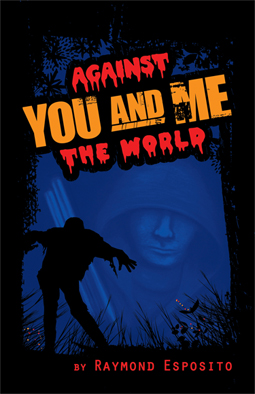
“You and Me, Against the World” by Raymond Esposito
You and Me, Against the World is the first volume in The Creepers saga, by Raymond Esposito. Mr. Esposito is a long-time fan of Stephen King and Richard Matheson, and has written many short horror stories. You and Me,Against the World is his first novel.
A devastating virus has swept the world, changing most of humanity into mindless, ravening monsters in a matter of days, sometimes hours. Even the government’s “extreme measures” could not contain this horrific virus, and the world changed to a terror-filled nightmare overnight.
Dr. Russell Thorn is thrust into this new world without warning, and the Creepers ,as the zombie-like victims of the virus are called, lay siege to his home, as he searches desperately for escape amidst the chilling revelation that the Creepers are changing…growing more intelligent. Dr. Thorn’s rescue by a group of young survivors starts him on a desperate quest to find the last safe place on earth. But the evolving Creepers are not the only thing standing in the path of safety.
You and Me, Against the World is a chilling tale that zombie fans will love. The action starts on the first page and never lets up. The story is filled with non-stop twists as the group of survivors battles the Creepers and dangers they never imagined in a thrill-packed, blood-chilling adventure.
This book had me up half the night reading it. I literally could not put it down! I read a lot of zombie stories–I’ve even written a couple myself–but I loved the unique twist the author puts on his “zombies.” Not to mention how quickly the virus spreads. And the cats…(shudder)…the cats really creeped me out. I found myself watching my own cats a little more closely. You should DEFINITELY read this!
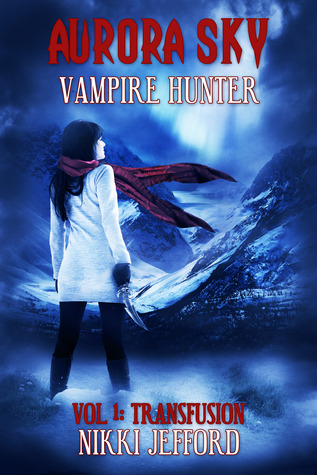
Nikki Jefford is “a third generation Alaskan who loves fictional bad boys and heroines who kick butt.” Ms Jefford is the author of the Spellbound trilogy (Entangled, Duplicity). Aurora Sky: Vampire Hunter is her newest novel. Full of action from the very first page, Aurora Sky is a book that will have the reader hanging onto every word, staying up late into the night to in out just what is going to happen next!
Aurora Sky has had all of Alaska she can take. She just wants to finish her senior year, get on with her life, and never look back. She’s had enough cold and snow to last a lifetime and she can’t wait to go to college anywhere else. But all that changes with a car crash on an icy road. Suddenly, getting out of Alaska is the last thing on her mind.
When she wakes up after the wreck, Aurora discovers she’s been saved by government agents because of her special blood type. In return for a medical miracle, now she’s forced to become a vampire hunter. Worse than the thought of having to kill monsters she never dreamed actually existed is the fact that she can’t leave Alaska.
Now, instead of worrying about college essays and making good grades, Aurora spends her free time training and thinking about a certain mysterious boy from school. Her old best friend doesn’t talk to her anymore, so she makes friends with some vampire groupies in an effort to find out more about the undead scene…and finds out that the boy of her dreams is more than he seems.
I’m proud to say I’ve actually made progress this week. Not on writing. I haven’t done any actual writing this week. Sigh….Muse? Where aaaaare you? Hello? Okay. This is what my progress on The Fall looks like over the past few weeks:
You’re right: nothing. No writing. But it’s only Tuesday….Apparently, my Muse has taken off for parts unknown. Knowing my Muse, “parts unknown” is probably code for “a beach with a hammock, a never-ending margarita machine, and a cute cabana boy.” I digress. Where was I? Not on a beach….
I did, however, manage to do my revision chapter outline for seven chapters of the werewolf story this morning. I also converted an entire chapter of the zombie story from 3rd person to 1st person POV. That’s trickier than it sounds…I’ve done short crits for two people in my writing group. Written several blog posts for my other blogs. And looooots of homework. Yay for homework. Except not.
Goals for the rest of the week: Convert another chapter of the zombie story. Finish the revision outline for the werewolf story. Write another chapter of The Fall. Survive.
A Natural History of Dragons, by Marie Brennan Artwork by Todd Lockwood
Marie Brennan is a former academic with a background in archaeology, anthropology, and folklore, which she now puts to rather cockeyed use in writing fantasy. She lives in the San Francisco Bay Area. In addition to many short stories and novellas, she is also the author of A Star Shall Fall and With Fate Conspire (both from Tor Books), as well as Warrior, Witch, Midnight Never Come, In Ashes Lie, and Lies and Prophecy. You can find her online at SwanTower.com.
You, dear reader, continue at your own risk. It is not for the faint of heart—no more so than the study of dragons itself. But such study offers rewards beyond compare: to stand in a dragon’s presence, even for the briefest of moments—even at the risk of one’s life—is a delight that, once experienced, can never be forgotten. . . . All the world, from Scirland to the farthest reaches of Eriga, know Isabella, Lady Trent, to be the world’s preeminent dragon naturalist. She is the remarkable woman who brought the study of dragons out of the misty shadows of myth and misunderstanding into the clear light of modern science. But before she became the illustrious figure we know today, there was a bookish young woman whose passion for learning, natural history, and, yes, dragons defied the stifling conventions of her day.
Here at last, in her own words, is the true story of a pioneering spirit who risked her reputation, her prospects, and her fragile flesh and bone to satisfy her scientific curiosity; of how she sought true love and happiness despite her lamentable eccentricities; and of her thrilling expedition to the perilous mountains of Vystrana, where she made the first of many historic discoveries that would change the world forever.
Marie Brennan introduces an enchanting new world in A Natural History of Dragons.
‘A Natural History of Dragons’ brings the Victorian era to life with stunning details and such lifelike depictions that the reader will truly feel like they are on an expedition to study dragons. From the very beginning, when Isabella was just a child and fascinated with sparklings, the majesty and mystery of dragons shrouds every page. Though mystical, magical creatures to the reader, Ms Brennan brings them to startling life with each tiny detail revealed. The beautiful illustrations bring the entire world to life.
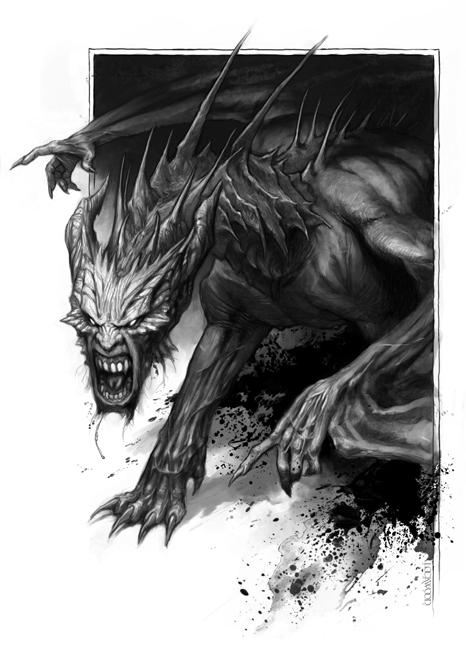
Zhagrit Mat, by Todd Lockwood
Isabella is no shrinking violet, and her rather madcap adventures grow from the natural curiosity of a child to mould her into the Darwin of dragons. Ms Brennan masterfully and evocatively tells this memoir-style tale of one girl’s love of dragons, and her willingness to sacrifice everything to study them.
P.S. I really enjoyed this book. I’ve always loved Victorian-era fiction, if done well, and this one is done extremely well. I could totally relate to Isabella searching for sparklings behind the house, since I used to always be on the lookout for different animals and plants when I was a child. If there had been tiny dragons around, well, my joy would have been boundless. I had the pleasure of meeting Ms Brennan several years ago at Conestoga Writers Conference, and really enjoyed her thoughts on the different panels. She was nice enough to answer questions from aspiring writers, and her kindness made a huge impression on me. I’ve read most of her books (Witch, Warrior, Midnight Never Come, In Ashes Lie), and loved them all. If you’re looking to read something a little different, I highly recommend them.
So, despite loads of homework and reading for school, I managed to do mini-outlines for two more chapters in the werewolf story. Progress, although of the infinitesimal, snail-like variety. Three chapters down, 29 to go…but it will get done. And I promised my best friend/co-writer that I would convert ONE chapter of our zombie story to first-person this weekend. I’m also thinking about trying out Scrivener. Anybody out there used it or have any opinions or comments about it?
I also have this sitting on my desk, waiting to be read:
Personal bribery at its best…
I know, I know. The Wheel of Time series has dragged on forever. I’ve heard all the complaints. Seen all the bad reviews for the series in general. I know. Also, I don’t care. I haven’t opened it yet. IF I get all the stuff done that I need to this weekend–homework, writing, revision, blogging, cleaning, re-decorating, planting–THEN I will start reading it. If not, well, it’ll have to wait. It’s been years since I started reading the series, I don’t think a few more days will hurt me.
So, school started again today. Not that I went. Um, the roads were pretty crappy this morning due to a winter weather system that moved in early this morning, and after watching news and traffic reports for a while, I decided I didn’t really want to risk driving 25 miles to school on the first day of the semester. Yes, I hate missing class. But at least this was a day that would have been at least partially taken up with going over the syllabus, which I’ve already read. So instead of risking my life with crazy Texas drivers who freak out at the first snowflake (and let’s not even talk about ice), I stayed home. I did quite a bit of homework. Yeah, I know, it’s the first day of classes. But the more I get done during the week, the less I have to do this weekend. And with 17 hours this semester, there’s a lot to do.
Despite my busy schedule, I still want to keep up with my writing. That means I have to set small goals, instead of my usual over-the-top, all-or-nothing method. With that end in mind, I’ve decided to do a very brief chapter outline of the werewolf story, to make revisions a bit less overwhelming. So I outlined the first chapter today. Granted, it’s maybe 5 sentences, but it’s progress, and I plan to do more work on it the rest of the week. I also plan on converting one chapter of the zombie story to first-person each week, and I also intend to get in at least one writing session a week on the new story. In addition, I’d like to keep up a twice-weekly blogging schedule. That doesn’t sound like much, but I do have two other blogs, so that’s a bit more time-intensive.
This week I’m focusing on baby steps. The tortoise won the race, didn’t he?