Happy New Year! I hope everyone had/is having a good holiday weekend.
This is, of course, the obligatory re-hash of my 2016 goals, as well as a public declaration of my goals for 2017.
In 2016, my goals were:
Writing:
1) Finish Witches HTRYN. Didn’t happen. I started work on it, and realized that I have to re-write the story from scratch (mostly).
2) Finish 1st draft of Siren Song. Done! (More or less.)
3) Finish 1st draft of The Fall.Nope. I did write some of it, but not much.
4) Start Camelot Done! (To the tune of 1 chapter, a sort-of prologue, and some brainstorming.
5) Revise Casting Shadows. Didn’t even look at it.
6) Finish copyediting classes and make X dollars at it per month. Also no, although I did work on the classes some.
7) Have 500 followers on this blog. Only up to 314.
8) Have 200 followers on my personal blog. Only up to 199.
Reading:
1) Read Gone with the Wind. Done!
2) Read 1 book per month from my TBR shelf. Done!
3) Read all books on the reading list for my American Women Writers class (8 total). Done!
4) Read one classic per month. Done!
5) Read one book of poetry. Done!
6) Read 2 books per month to review. Done!
7) Read one inspirational book per month. Done!
8) Read 75 books total. Done!Actually, I read 128 books—WAY over my goal—which I’m pretty happy about. You can check out my books on the 2016 Goodreads challenge here.
Goals for 2017
Writing:
1) Finish draft of The Fall.
2) Finish draft of Camelot.
3) Finish Witches revision.
4) Self-pub something or find agent.
5) Revise Chasing Shadows.
6) Publish/sub Chasing Shadows.
7) Do/win NaNo (with the Southern Fic story).
Reading
1) Read one book per month set in a different culture or by an author from a different culture.
I kind of forgot to post an update yesterday, so this is a day late (and a dollar short).
Current word count: 24,257. Almost halfway done.I feel this word count is more impressive if you also know that I’ve written 4,000 words each of the last 3 days.
Current mental status:
I don’t own this image, either, but can we talk about the slightly manic look on this cat’s face? SO. ACCURATE.
With the first calendar week of NaNo over, I thought I I’d give a brief update: I’ve written 10, 272 words so far. That’s more than I’ve written in a week in probably 5 years! I’m happy with my progress, and eager for more.
So…I’ve decided to do NaNo next month for the first time since 2012.
Yes, I have a full-time job with long, crazy hours. Yes, I go to school, too. Yes, I have a 5k to train for in 2 weeks, a 10k in 5 weeks, and a half-marathon in February. Yes, I have 2 blogs to maintain and I write book reviews for My Trending Stories.
What’s your point?
I participated in—and won—NaNo 5 years in a row, from 2007-2011. I started NaNo in 2012, but depression hit me hard, and I abandoned it (along with practically everything else). I found that barely-started story (about 35 pages of it) last year and did not even remember writing it. (But I was pretty impressed!)
When I had mostly conquered my depression (May 2013), I wanted to get back to my normal life. Then I had a stroke on June 1st. I spent the next 6 months in a haze of exhaustion, recovery, and adaptation as I came to terms with my new normal after almost dying.
I didn’t write a thing for over a year.
Slowly, I’ve gotten back into writing, but I miss the adrenaline-fueled rush of NaNo, so I’m giving it a shot next week.
Guess which story I’m going to finish? Yep. The one I started during my last NaNo.
…I’ve decided to do NaNoWriMo for the first time in 4 years! I did it–and “won”–5 years in a row, from 2007-2011. In 2012, I started it, but then my depression kicked in and I stopped writing.
Had the stroke in June 2013, and I’ve been struggling to get my writing groove back ever since.
I’m not going to write a new novel, though. Instead, I’m going to finish the novel I started in 2012, now called Siren Song. I finished the outline months ago. Now I’m going to put it to use.
Yes, it’s probably insane to be working full-time, finishing up my Bachelor’s degree, and training for a 10k..and deciding I need to spend most of November writing.
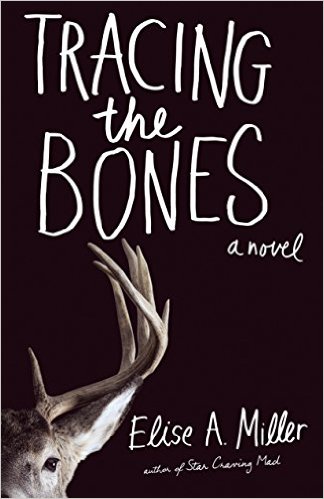
I do not own this image. Image belongs to SparkPress.
Elise A. Miller is a fitness instructor and a writer of both fiction and essays. Her first novel, Star Craving Mad, was first published in 2004. Tracing the Bonesis her second novel.
Eve Myers is a housewife haunted by her husband’s long-ago affair. She has two kids, chronic back pain, and scribbles story ideas on scraps of paper as she drifts numbly through her monotonous life. Until a new family moves into the house next door.
Now Eve is obsessed with beautiful life coach Anna and sexy alternative healer Billy. Anna has abilities Eve never imagined, and Billy is haunted by a dark, troubled past. While Eve starts healing sessions with Billy, tragedy strikes, drawing Eve into a tangled web of suspicion and sending her marriage careening towards a precipice of mistrust and betrayal.
Tracing the Bones is a compelling, intriguing story about flawed characters and their struggles. I understood—and sympathized—with Eve’s pain as well as her curiosity. The aftermath of tragedy, and Eve’s ever-deepening involvement in the darkness offered her a chance at resolution and redemption. I enjoyed this book very much.
At the beginning of the year, I set quite a few goals for myself (not resolutions). Eight goals in each of three separate categories, one being reading and one being writing. I thought it would be interesting to take a look at how I’m doing on those goals, since we’re halfway through the year.
Reading goals:
1) Read GWTW.
2) Read 1 book per month from TBR.
3) Read all books on AWR list.
4) Read one classic per month.
5) Read one book of poetry.
6) Read 2 books per month to review.
7) Read one inspirational book per month.
8) Read 75 books.
I haven’t read any of Gone with the Wind since January, so I better get on that. I have read one book each month from my TBR pile. I successfully read all of the books on the reading list for my American Women Writers class. I have read a classic per month. I have not read any poetry. (Oops.) I’ve read and reviewed at least two books each month. I’ve read at least one inspirational book each month. And I’ve currently read 69 out of my goal of 75 books.
Writing goals:
Writing goals:
1) Finish Witches HTRYN.
2) Finish 1st draft of Siren Song.
3) Finish 1st draft of The Fall.
4) Start Camelot.
5) Revise Casting Shadows.
6) Finish copyediting classes and start making money at it.
7) Have 500 followers on this blog.
8) Have 200 followers on my personal blog.
I’m still working on the revision of Witches.Siren Song is outlined, but I stopped working on it, and started writing on The Fall again. No progress on Camelot. No progress on Casting Shadows. I’m still working on the copyediting classes. I’m still chipping away at the blog goals.
Verdict: I’m doing okay on my goals, but I need to get it together and get on all of them!
I’ve kind of been struggling to get words on the page lately. (Ironic, since it’s summer, and time off from classes was supposed to mean time to write…) I switched WIPs, from Siren Song (which is currently outlined) to The Fall (which..is not. Not even remotely outlined. Sigh…)
I’m just having some trouble getting myself motivated.
But I saw this post over on Ana Spoke’s blog, and it piqued my interest (Is that even the right word? Google did not help me at all here.)
Has anyone used Scrivener? Any tips/suggestions/thoughts?
(This image does not belong to me. Image belongs to She Writes Press.)
A couple of weeks ago, I reviewed A Drop in the Ocean, by Jenni Ogden. This novel deals with many things: love, family, medical ethics, and dealing with neurological conditions. It is emotional and moving, gripping and yet freeing at the same time. Today I have an interview with the author.
(Photo by Dominic Chaplin.)
1) What was the catalyst for you to start writing fiction? (Even with the subject matter of A Drop in the Ocean, that seems like such a large step from neuropsychology.)
I loved my career as a university teacher, researcher, and supervisor of clinical psychology students, and a big part of this was always writing. Of course, it was nonfiction writing, from research articles to writing case studies of dysfunctional families for my clinical students to use as practice scenarios. My specialist area, clinical neuropsychology, gave me the excuse to delve into the lives of patients with various brain disorders (similar to those Oliver Sacks wrote about), and I wrote two books of case studies, a textbook, Fractured Minds and a book for the general reader, Trouble In Mind: Stories from a Neuropsychologist’s Casebook. These are not fiction of course but they did allow me to practice writing in a way that would draw the reader into the lives of my “patients.” When readers say some of the stories in my textbook made them cry, I feel happy! But I had to leave the university and go and live on a remote island before I could truly concentrate on the dream I’d harbored for years, writing fiction.
2) Who is your favorite author and why? (Do you love being scared by Stephen King, inspired by Maya Angelou, loved by Nicholas Sparks, entertained by Jane Austen?)
I have so many authors whose writing I love, but I don’t often re-read books as there are too many new books to read. I think I will read many again as I get older and can’t afford to buy more books! But authors I really love are Sebastian Faulks, Rumer Godden, Anna Quindlen, Chris Cleave, Ann Hood. Richard North Patterson is by far my favourite thriller writer.
3) What is your absolute favorite, read over-and-over again, book? (Mine is “Gone with Wind,” which I’ve read about 25 times, because the story and the characters are so real to me.)
One book I have read a few times is Wuthering Heights. I first read this in school and it hasn’t lost its pull on me. I know the ‘Bronte’ area reasonably well as my husband’s family come from around there (there are over a hundred of them who were “buried” by Patrick Bronte and lie in the Haworth Church graveyard!) But my favorite novel is Crossing to Safety by Wallace Stegner. I often read bits of this again, just to get the feel of his words. Also China Court and In This House of Brede by Rumer Godden are two of the most beautiful novels I have ever read, and these too I often browse for inspiration.
4) Where is your dream place to write? (Personally, I have visions of white sand and waves, although I live nowhere near the ocean. That seems like it might be much more within reach for you.)
I do most of my writing in my study five minutes walk from one of the most beautiful beaches on earth. White sand, clear blue sea and usually only me on it when I take a break and go for a walk or run or swim! Much of my reading is done lying under my big tree on the beach, or sitting on “Jenni’s Lookout” looking over the sea. My study has big windows that look over a rural scene with no buildings in view. In the NZ winter I write from our small apartment there in the Far North Queensland tropics, with a lagoon pool two meters from me and a beach 10 minutes walk away.
5) What is your absolute favorite part about writing fiction? (The imaginary people is definitely mine.)
As a psychologist, discovering the deep parts of my characters’ personalities are probably my favorite part, but I also love writing about settings, partly because they are often places I know well or at least have been to, and have loved. I also enjoy the research that goes into getting facts right and giving the story authenticity. And I really do like revision, and having the time to mess about with word choice, knowing I have the bones in place.
6) Do you have any advice for someone faced with the prospect of living with a brain disorder? (I have a strong family history of Alzheimer’s, and I had a stroke three years ago due to a dissection in the vertebral artery. You might say this is a topic close to my heart.)
That is a hard thing to deal with. Coping is a little different for everyone, but often finding out all you can about the disorder and the likely prognosis helps, gives back some control, and stops those anxieties that come with “guessing.” For almost everyone, having a close support team of friends, family and health professionals who you feel comfortable with is very important. Often getting involved with research if that is a possibility can be rewarding, and gives the individual something ‘bigger’ to think about, and often comes with better treatment of the condition as well. Keeping on with or gradually returning to activities one enjoys and keeping social contacts alive is very important for resilience and happiness, and for making the very best of the future, however long or short that may be.
7) Tell me a little bit about A Drop in the Ocean. (What was your inspiration for writing it, and what is the message you wanted to convey with it?)
The story opens as Boston neuroscientist and dedicated introvert, 49 year old Anna Fergusson, discovers the funding for her long-time research lab has been terminated. Fran, her only friend, sees an advert offering a cabin for rent on a tiny tropical island on Australia’s Great Barrier Reef and Anna decides to take it up. It will give her breathing space and she can pen a memoir about running a lab while she decides what to do with the rest of her life. But Turtle Island, alive with sea birds and nesting Green turtles, is not the retreat she expected. Here she finds love: for the eccentric islanders who become her family; for Tom, the younger laid-back turtle whisperer; and for the four women on the island. Then she joins the turtle research team and falls in love with the turtles whose ancient mothering instincts move her to tears. But Tom has a secret, and Anna’s estranged mother in far away Shetland needs her, and as Anna’s life-changing year draws to a close her dream for a new life is threatened by a darkness that challenges everything she has come to believe about the power of love.
It is a quiet story but with deep themes about marine turtle conservation, Huntington’s disease and medical ethics, belonging—and the ripples that can flow from the family we choose to the family that chooses us, and the hardest lesson of all, that love is about letting go.
My inspiration for the story was my love of this environment. I was a turtle tagger myself on an island rather like Turtle Island when our children were young, and coral cays are magical places. Many of the things that happen in the novel around the turtles and birds come from my own experiences, but Anna, who is a neuroscientist, as was I, is totally different from me! No-one would call me a dedicated introvert, and I have 4 children and 5 grandchildren, unlike Anna who was single and lonely for the first 49 years of her life.
Thank you, Ms. Ogden for taking the time out of your schedule to answer a few questions. (I’m a bit jealous of your description of your study and its proximity to the beach.) Check out the novel A Drop in the Ocean for a great read!